

TL;DR
PE-backed companies are judged on more than revenue growth. With exits slower and hold periods longer, sponsors need proof that growth is repeatable: a defined ideal customer, consistent positioning, reliable pipeline data, a documented sales process, and evidence of what drives wins. A PE-backed revenue system makes growth measurable and transferable, so it doesn't depend on the founder or a few top sellers. Build it during the hold, not when a buyer starts asking.
Key takeaways
Revenue shows what happened. A revenue system shows it can happen again.
PE-backed exits fell from 1,210 in 1H 2025 to 872 in 1H 2026, so hold periods are doing more of the work.
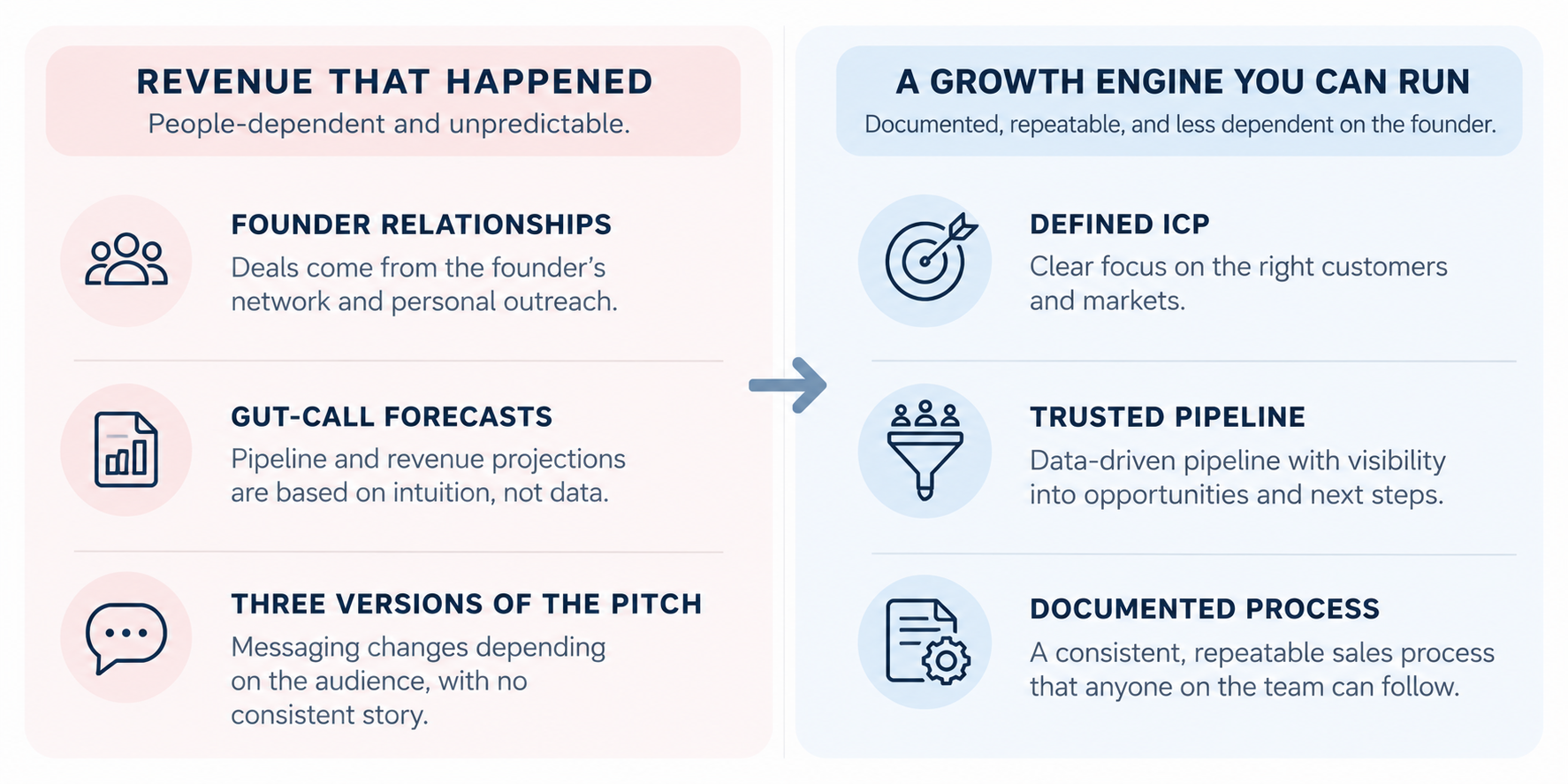
Founder-dependent selling, untrusted CRM data, and inconsistent messaging all cap how far the company can scale.
New tech and star hires don't fix undefined foundations.
Build the system in the order your business needs it, with owners and milestones tied to the value-creation plan.
The board meeting is going fine until the operating partner asks a simple question: where does next year's growth come from?
You point to revenue. It's up. Your sales leader says pipeline looks strong. Marketing pulls up a funnel. You mention the three big deals you're personally working.
Every answer is true. None of them have the same answer. And you can feel the room notice.
Why does a PE-backed company need a revenue system?
Because revenue tells the board what happened. A revenue system tells them it will happen again.
A revenue system is the documented, measurable way your company finds, wins, and keeps customers, so growth doesn't depend on who happens to be in the room. Most PE-backed companies have revenue. Far fewer have the system.
“Revenue tells the board what happened. The revenue system tells them it will happen again.”
Think of a restaurant where only the head chef knows the recipes. The food is great. The reviews are great. But you can't open a second location, you can't survive the chef's vacation, and no buyer pays a premium for a kitchen that walks out the door every night.
That's a value-creation problem, not a marketing problem. And it's on your desk whether you're selling next year or not.
The hold period isn't a waiting room
Exits are slower, and sponsors know it. CohnReznick's Private Equity Mid-Year 2026 Trend Report, using PitchBook data on U.S. private equity, counted 872 PE-backed exits in the first half of 2026, down from 1,210 in the first half of 2025. The same report says returns for the rest of the year will come from execution and operational improvement, not multiple expansion.
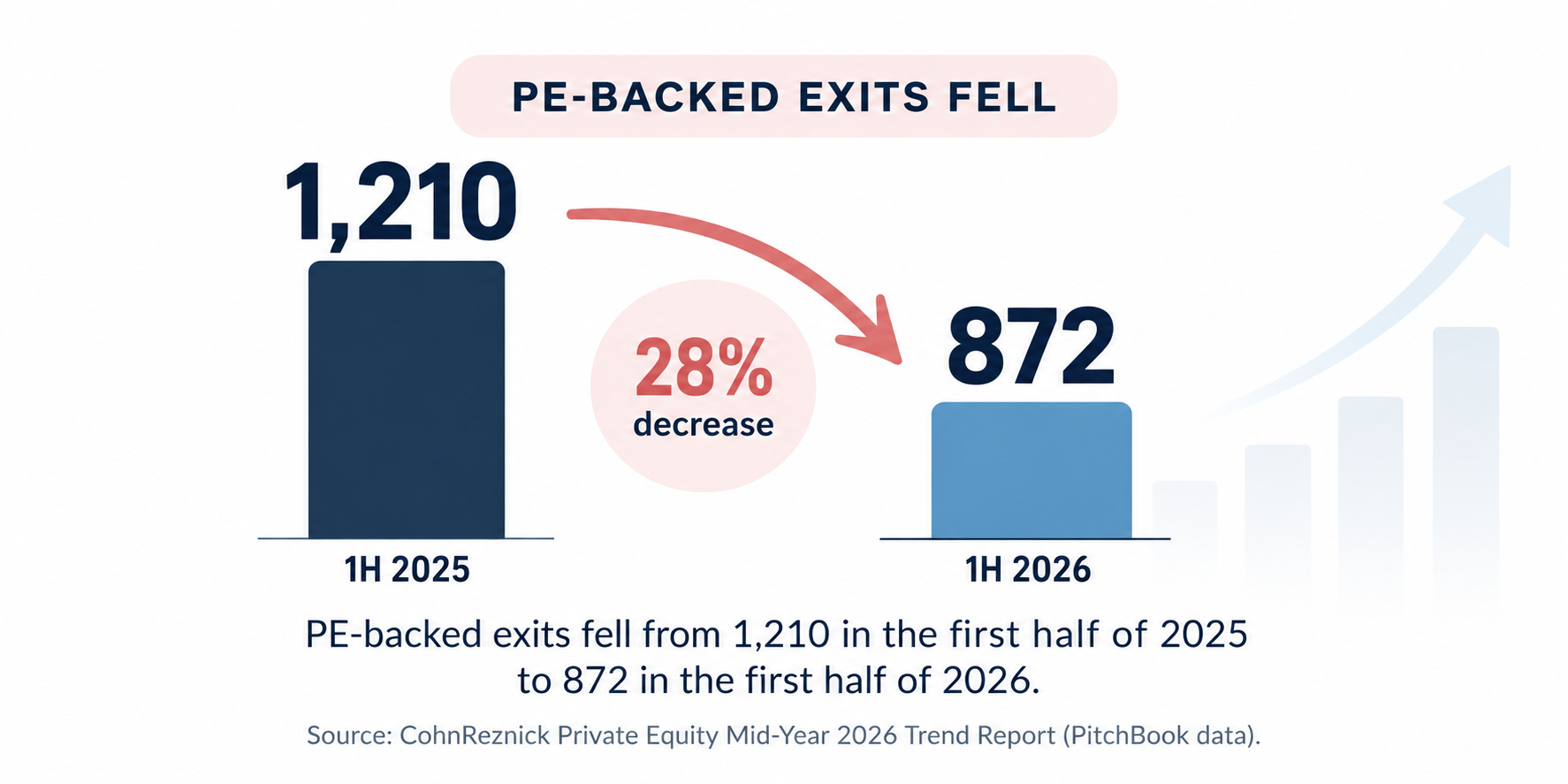
Translation: nobody's counting on the market to bail out the deal. They're counting on you.
A longer hold cuts both ways. It gives you time to fix things. It also gives every weakness more time to surface. Shaky CRM data makes forecasts unreliable. Fuzzy customer concentration hides risk. A sales process built on relationships stops scaling right when you need it to.
How do you know your growth depends on people, not a system?
Five tells give it away.
The first is that the founder is still the best salesperson in the company, and every deal that matters routes through one inbox.
The second is that you can't explain why you win with evidence. Your team has theories. The board wants a pattern.
The third is that the CRM is a filing cabinet, not an instrument. Stages mean different things to different reps, so the forecast is a collection of gut calls with a spreadsheet wrapped around it.
The fourth is that your people describe the company three different ways. Proposals read like they came from three different firms, because in a sense they did.
The fifth is that acquisitions don't plug in. The playbook lives in a few experienced heads, so it doesn't transfer to a new team, product line, or region.
Any one of these is manageable. Together, they put a ceiling on the company.
Recognize two or more of those? That's where the Growth System Assessment starts. Let's talk.
Why doesn't buying more sales tech fix it?
When the board wants a clearer growth story, the reflex is to buy one. A new CRM. An AI forecasting tool. A big-name CRO hired to fix sales.
None of it works on undefined foundations. A new CRM on top of stages nobody agrees on is a more expensive filing cabinet. A star CRO inherits the same founder-dependent deals and gets blamed for them. And a polished board deck telling a growth story your data can't back up is worse than no story at all.
Technology can support a system. It can't decide what the system is.
“Technology can support a system. It can't decide what the system is.”
What does a sponsor-ready revenue system look like?
It doesn't mean ripping out everything you have. It means getting five things right, in the order your business needs them.
Start with a defined ideal customer profile: who you serve best, what problem they're paying to solve, and which deals produce profitable growth. Then positioning that holds together, so the website, the sales call, and the proposal all describe the same company. Then pipeline data you'd bet on, with agreed definitions for stages, qualification, and forecast categories. Then a documented sales process, so what your best reps do becomes something you can coach and onboard. Finally, evidence: which segments, channels, and offers drive growth, backed by real customer outcomes.
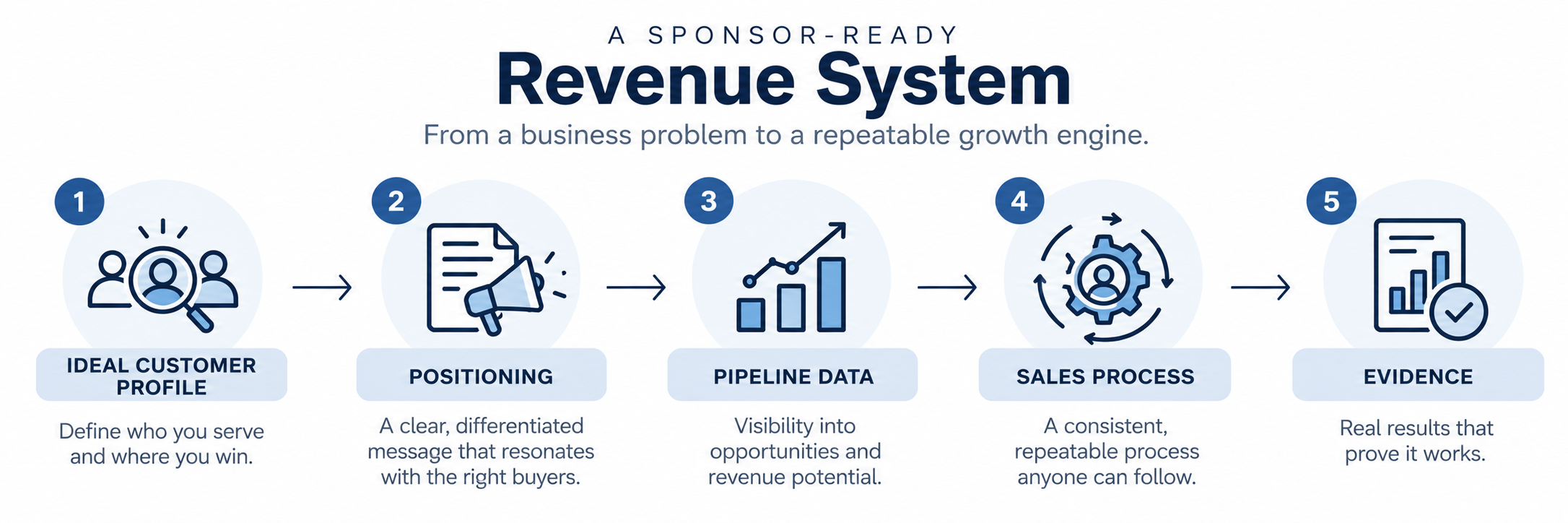
Sequence follows the problem, not the latest tool. If pipeline visibility is the weak spot, fix CRM definitions before buying reporting software. If the founder carries the sales motion, document positioning and process before you hire more reps.
Give each piece an owner, milestones, and a line in the value-creation plan. If you need senior hands to build it, that's what our embedded retainers are for. Then pressure-test the system against the questions a buyer will ask anyway.
How much qualified pipeline do we have for the next two quarters?
What percentage of opportunities become customers, and why?
How long does a deal take to close?
How dependent is growth on a handful of customers or sellers?
The easiest time to build this is before anyone demands it.
You can build it now, on your timeline. Or you can build it later, under a buyer's microscope, on theirs.
“You can build it now, on your timeline. Or you can build it later, under a buyer's microscope, on theirs.”
FAQ
What is a revenue system in a PE-backed company?
A revenue system is the documented, measurable way a company finds, wins, and keeps customers. It includes a defined ideal customer profile, consistent positioning, reliable pipeline data, a repeatable sales process, and evidence of what drives growth. It lets leadership and sponsors see how growth happens instead of relying on a few individuals.
Why does private equity care about our commercial engine if we're not selling?
Sponsors need to show how a portfolio company creates value throughout the hold, not only at exit. CohnReznick's 2026 mid-year report found PE-backed exits fell to 872 in the first half of 2026 from 1,210 a year earlier, which puts more weight on operational improvement during longer holds. A repeatable commercial engine is one of the clearest ways to show that improvement.
How do I know if our growth depends too much on the founder?
Common signs include the founder closing most important deals, sales knowledge that isn't written down, and new reps who take a long time to ramp. If growth would slow noticeably when the founder steps back, the company is founder-dependent rather than system-driven.
Should a PE-backed company buy a new CRM to fix pipeline visibility?
Usually not first. A CRM only works when leadership agrees on stage definitions, qualification criteria, ownership, and forecast categories. Set those definitions, then decide whether the current tool can support them.
When should a PE-backed company start building its revenue system?
As early in the hold period as possible. Building it before an exit process begins gives leadership time to make deliberate changes and measure their effects, instead of fixing data and process gaps under a buyer's scrutiny.
If you're PE-backed and the board wants a growth story you can prove, connect with us to get started.