

What Fractional Leadership Means
A founder had been running marketing for six years. Not officially. Nobody put it on a org chart. But every campaign decision, every message, every call on positioning ran through him, because there was no one else to run it through.
Revenue plateaued. He assumed the fix was better tactics: a new agency, a rebrand, a smarter funnel. The real problem was structural. He was doing a job that was never supposed to be his, and no amount of tactical polish was going to fix a leadership gap.
This is the story behind most fractional CMO conversations. Not a company trying to save money on a hire. A founder who hit the ceiling of what founder-led marketing can do, and a business that needs senior leadership it does not yet have.
The Wrong Way to Evaluate Fractional Leadership
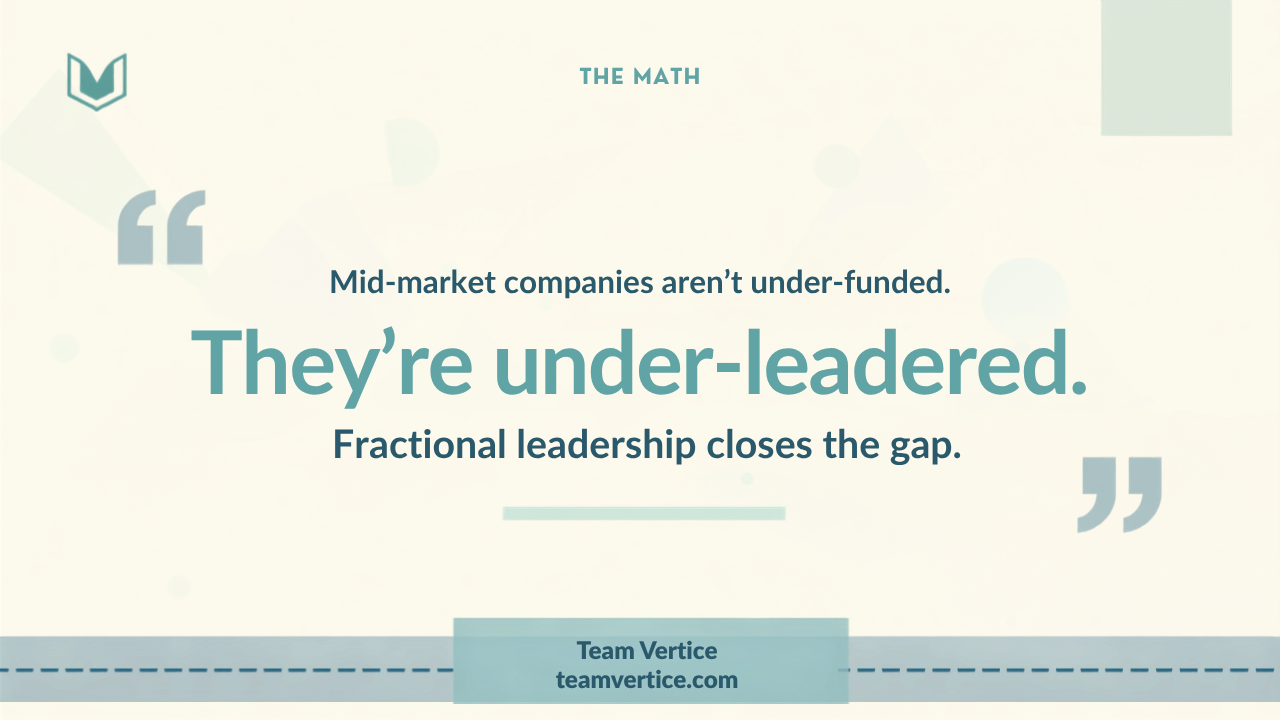
Most people size up fractional leadership as a cheaper substitute for a full-time hire. Wrong frame. The real question is not whether you can afford a $250,000 CMO. The real question is whether your business has ever had senior marketing leadership at all.
A lot of mid-market companies have not. They have a founder who has been improvising the function, a marketing coordinator executing tactics with no strategic direction above them, or a junior hire who is talented but has never run a growth engine. None of that is leadership. It is activity without a system behind it.
Fractional CMO for mid-market companies exists to close that gap. Not to be a lesser version of a full-time executive, but to put a senior operator in the seat that has been empty.
Fractional Does Not Mean Part Time
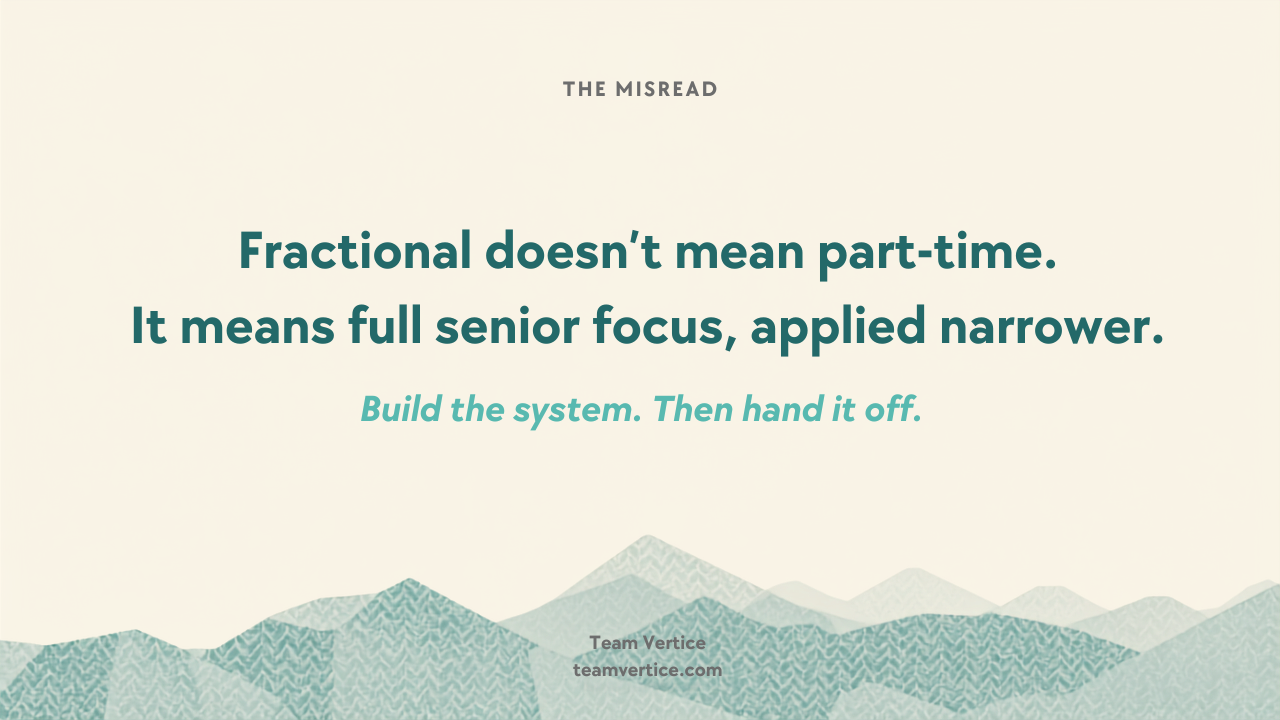
The word fractional gets misread as part-time effort. It means something different: full senior focus, applied in a structured, concentrated engagement instead of a diluted, generalist one.
A good fractional CMO is not checking in once a month with a slide deck. They are in the leadership meetings. They are making the calls on positioning, on the funnel, on where marketing dollars go and why. The commitment is smaller in hours. The seniority is not smaller at all.
This is the distinction that determines whether an engagement works. Companies that treat fractional leadership as a light-touch advisory relationship get light-touch results. Companies that embed the fractional leader as a real member of the leadership team get a real marketing function.
The Job Is to Build the System, Not Become It
Here is how to know if a fractional engagement is working: the company gets stronger, not more dependent. A fractional CMO who becomes indispensable has failed at their job.
The mandate is to build what is missing. A documented go-to-market motion, which is a messaging framework the sales team uses. A demand gen system that runs on a process, not on one person's instincts. Infrastructure that survives the fractional leader walking out the door.
If the whole marketing function collapses the day the engagement ends, that was never leadership. That was outsourcing dressed up as leadership, and it leaves the company exactly where it started.
The Real Signal It Worked
Sales and marketing running from the same playbook, without the fractional leader in the room to referee it. That is the tell. Not a nicer deck. Not a busier content calendar. Alignment that holds up on its own.
When to hire a fractional CMO is less about company size and more about this specific moment: growth has stalled, the founder is still the de facto head of marketing, and nobody internally has the seniority to build a real system. That moment does not resolve itself. It compounds.
Waiting for the moment to be more obvious is a decision too. It just costs quarters instead of dollars. Every month the founder stays in the marketing seat is a month the business does not get his full attention, and the marketing function does not get the leadership it needs.
Fractional leadership is not a discount. It is a structural fix for a specific stage of growth, and it works when the company treats it like real leadership instead of a part-time favor.
If your growth has stalled and marketing leadership has been improvised for too long, the Growth System Assessment is where we find out what's and who might be missing. Contact Us.