

AI Won’t Fix a Broken Growth System. Here’s What It Will Do.
Almost every B2B company is using AI in some capacity right now. Almost none of them are seeing it move the revenue number.
That gap is not a technology problem. It's a fundamentals problem.
The companies extracting real value from AI didn't start with a tool. They started with a functioning growth system, clear ICP, documented pipeline, messaging that already resonated in the market, and a sales motion that worked without heroics. Then they added AI on top of it. The companies that aren't seeing results did the opposite. They bought the tools first and assumed the results would follow.
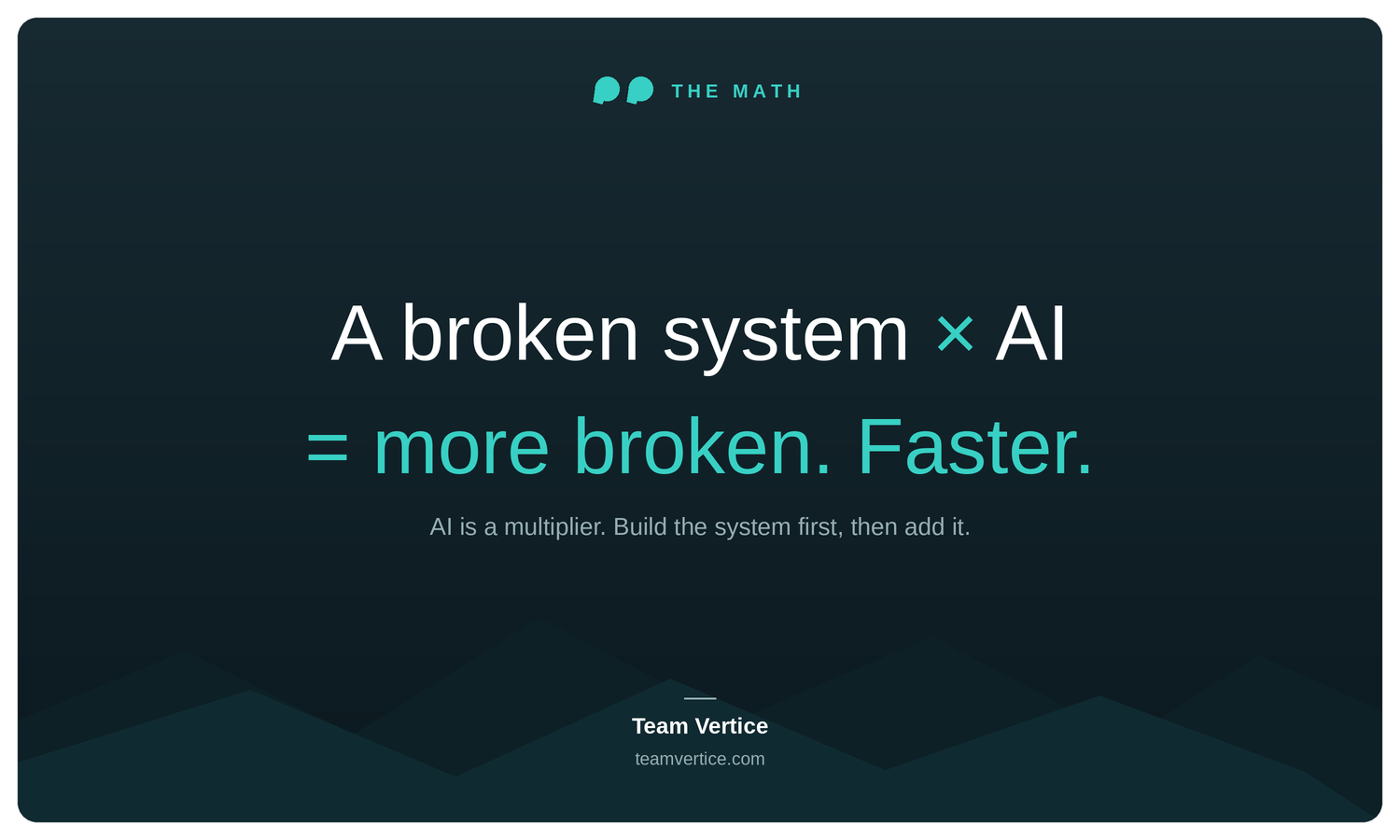
They won't. AI is a multiplier. If what you're multiplying is broken, you get more broken, faster.
The Pressure Is Real. The Response Usually Isn't.
CEOs and CMOs are under genuine board pressure to do something with AI. That pressure is legitimate. The competitive threat is real. The efficiency gains are real. The companies that figure this out will have a meaningful advantage over the ones that don't.
But the response most companies are making, buying tools, running pilots, appointing an AI committee, is not the same as building an AI strategy. And the distinction matters enormously.
The bottleneck is not access to AI. Every company has access. The bottleneck is organizational readiness to use it well. Strategy, data, process. Most companies haven't sorted those out yet and the tools can't sort them out for you.
Most mid-market B2B companies are not ready. That's not a criticism. It's a starting point.
What AI Does Well
AI does specific things exceptionally well inside a B2B growth system. The problem is that most companies try to use it before the system exists.
Inside a functioning growth engine, AI accelerates personalization at scale. If you have a defined ICP and a message that already converts, AI can help you reach more of the right buyers with more relevant outreach than your team could produce manually. That's a real advantage. But if your ICP is vague and your message doesn't land, AI spreads that confusion to more people faster.
AI reduces time-to-insight in competitive and market research. Teams that previously spent days pulling together a competitive brief can do it in hours. But this only matters if the team knows what questions to ask and how to act on the answers. AI surfaces information. It doesn't replace judgment.
AI automates the repetitive parts of content production, the reformatting, the distribution, the variant testing, so the humans on your team can do the thinking. That's where the real leverage is. Not in replacing the thinking. In protecting more time for it.
AI improves pipeline intelligence when the underlying data is clean. Deal scoring, engagement signals, churn risk, these models work when the CRM is accurate and the sales process is documented. They don't work when the data is a mess of stale opportunities and optimistic close dates.
In every case, the value of AI depends entirely on the quality of what's underneath it.
What Needs to Be True First
There are four things that have to be in place before AI adds meaningful value to a B2B growth system.
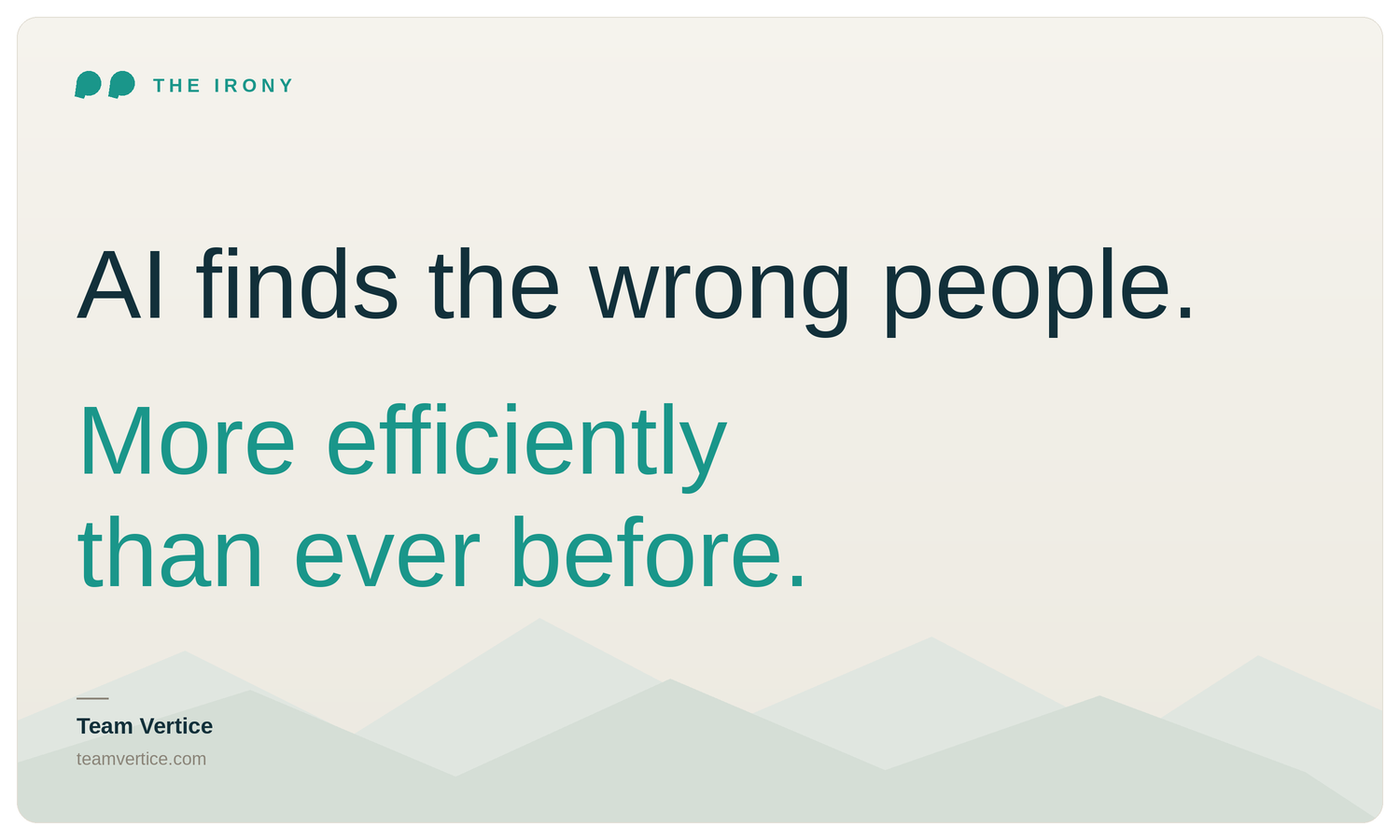
The first is a defined ICP. AI can target, personalize, and optimize at scale. But it can only target who you've already defined. If your ideal customer profile is vague, AI will generate a lot of activity aimed at the wrong people. More efficiently than ever before.
The second is a message that works. AI amplifies. It does not fix. If your positioning doesn't resonate with buyers today, running it through an AI content engine will produce more of the same message at higher volume. The output will be faster and cheaper. It still won't convert.
The third is clean data infrastructure. Garbage in, garbage out is the oldest principle in technology and AI hasn't changed it. Pipeline intelligence, predictive models, and personalization engines all depend on accurate, structured data. Before you invest in AI tools, invest in knowing whether your CRM data is real.
The fourth is a documented process. You cannot automate tribal knowledge. If the sales motion lives in the heads of two senior reps and the demand gen strategy changes with every new hire, there is nothing for AI to systematize. The process has to exist on paper before it can be encoded in software.
Most mid-market B2B companies are missing at least two of these four things. That's why the AI investments aren't producing results. The tools are fine. The foundation isn't ready.
The Right Question
The board is asking: are we using AI? That's the wrong question.
The right question is: what specific problem are we solving, and is AI the right tool to solve it?
Most companies can't answer that. Not because they're unsophisticated. Because nobody has mapped the revenue system clearly enough to know where the friction actually lives. The barrier to AI isn't budget. It's clarity. Companies that get this stop asking which tool to buy and start asking which process is costing them the most. Then they find out if AI can solve it.
That reframe changes everything. Instead of an AI committee evaluating vendors, you have a growth leader identifying the highest-friction point in the revenue system and asking whether AI can reduce it. That's a solvable problem. The other approach produces a tool stack that nobody uses and a board presentation that doesn't move the number.
Build the System First
The companies winning with AI right now didn't win because they adopted it faster. They won because they had clean fundamentals before they started.
Sharp ICP. Message that converts. Documented pipeline. Sales motion that doesn't depend on one person. When those four things are in place, AI is a genuine accelerant. It makes a working system work harder. It produces more pipeline, more efficiently, with more consistency than the team could manage manually.
Without those four things, AI produces more activity. Activity that looks like progress but doesn't move the revenue number.
Build the system first. Then add AI on top of it. That's the sequence that produces results. Everything else is expensive noise.
If you're under pressure to build an AI strategy and want to know whether your growth system is ready to support it, the Growth System Assessment is where we start. Contact us to learn more